Food branding is the process of creating a recognizable identity for a food product and shaping how customers perceive it. It brings together branding, strategy, visual identity, packaging, messaging, and customer experience to help a product stand out and communicate its value clearly. When these elements work together, they create a consistent brand experience that customers can recognize and remember across different touchpoints.
Effective food branding goes beyond a logo or attractive packaging. The right design helps communicate who the product is for, what it represents, and why customers should choose it, while a consistent brand voice can make the experience feel clear, approachable, and memorable across retail, e-commerce, and digital channels.
What Is Food Branding?
Food branding is the process of developing a distinct identity for a food product or brand and shaping how customers recognize and perceive it. It combines branding strategy, visual identity, packaging, messaging, and customer experience to communicate what a product represents and who it is designed for.
A strong food brand connects these elements into one consistent system. The design should support the brand’s positioning, while colors, typography, imagery, packaging, and brand voice work together to create a recognizable feel. Whether the goal is premium, natural, playful, modern, or friendly, each choice should reflect the target audience and the experience the brand wants to create.
Food branding also influences how a product is positioned within its category and how consistently that position is communicated over time. From the first impression on a retail shelf to the experience on an e-commerce product page, each touchpoint should reinforce the same core identity and make the product easier to recognize and remember.
Why Food Branding Matters
Food branding plays an important role in how customers recognize, understand, and remember a food product. In a crowded market, products can offer similar ingredients, benefits, or formats, making it harder for customers to distinguish between them. A clear branding system gives the product a recognizable identity and helps communicate its value before a customer even tries it.
The impact of food branding extends beyond recognition. Consistent design, messaging, and packaging can help build familiarity and consumer trust while creating a distinct feel around the product. When these elements reflect the same positioning and speak to the right audience, they can support stronger connections with customers and help a food brand remain recognizable as it grows.
Brand Awareness
Consistent visual elements help customers recognize a food product across different touchpoints. Logo design, colors, typography, packaging, and imagery can create familiar cues that make a brand easier to identify on retail shelves, product pages, social media, and other marketing channels. Over time, this consistency can strengthen brand recognition and make the product easier for customers to recall when making purchasing decisions.
Consumer Trust
Trust can develop when a brand consistently communicates what customers can expect from its products. Clear messaging, thoughtful packaging, and a cohesive visual identity can make a food brand feel more established and reliable. A friendly and relatable brand voice can also make communication feel more approachable.
Sales and Product Differentiation
Food products often compete with similar products that offer comparable features or benefits. Effective food branding helps create differentiation by giving a product a distinctive identity and personality. When strategy, packaging, and communication work together, customers can more easily understand what makes the product different and why it may be relevant to them.
Key Elements of Successful Food Branding
Successful food branding brings several elements together to create one recognizable and consistent brand experience. Each element has a different role, but they should all support the same positioning and communicate a clear idea about the product. When strategy and design work together, customers can more easily understand what a brand represents and recognize it across different touchpoints.
The strongest food brands do not treat their logo, packaging, messaging, and visual style as separate pieces. Instead, these elements form a connected system that can be applied across products and marketing channels. This consistency helps maintain recognition while giving the brand a clear foundation for future products and communication.
Brand Strategy and Positioning
Brand strategy defines where a food brand fits in the market and what makes it relevant to its target audience. It can include the audience, competitive landscape, product benefits, positioning, values, and the reasons customers should choose the brand over alternatives.
Clear positioning also provides direction for the creative work that follows. Without it, a brand can end up with attractive visuals that do not communicate a meaningful difference or connect with the people it is trying to reach.
Brand Identity
A food brand’s identity translates its strategy into a recognizable visual system. Logos, typography, colors, imagery, and other design elements should work together to create a distinctive identity that can be applied consistently across the brand.
A well-developed identity should also be flexible enough to work across different applications. This becomes particularly important when a food company introduces new products, expands its product range, or needs to communicate across both physical and digital channels.
Packaging Design
Packaging is one of the most visible expressions of a food brand. It needs to present important product information clearly while also communicating the brand’s identity and helping the product stand out among competing products.
Effective packaging design combines hierarchy, typography, color, imagery, and structure to guide attention and make the product easier to understand. It should also work as part of the wider brand system rather than feeling disconnected from the identity used elsewhere.
Brand Voice and Messaging
Brand voice determines how a food brand communicates with its audience through packaging copy, websites, social media, advertising, and other channels. The tone should reflect the brand’s positioning while remaining clear and consistent.
Messaging should also make the product’s value easy to understand. When the words and visual identity communicate the same idea, the overall brand experience becomes more cohesive and easier for customers to recognize.
Steps to Build a Strong Food Brand
Building a strong food brand starts with understanding the market, the people you want to reach, and the position you want the product to occupy. Before developing a food brand identity, brands need a clear foundation that connects the product, audience, and competitive landscape.
From there, strategy can guide the creative process. A defined position gives the identity and packaging a clear purpose, while testing and refinement help ensure the final brand communicates effectively across real customer touchpoints.
Research and Positioning
Start by researching the market, competitors, and target audience. Look at how competing food products present themselves, what visual patterns appear repeatedly, and where opportunities exist for a different approach.
This research should help define the product’s positioning and unique selling proposition. A clear position gives the brand a specific direction instead of trying to appeal to everyone.
Develop the Brand Identity
Once the positioning is established, develop a visual identity that reflects the product and its audience. This can include the logo, color palette, typography, imagery, and supporting graphic elements.
The identity should be distinctive while remaining practical enough to work across packaging, websites, social media, and other marketing materials. A flexible system also makes it easier to maintain consistency as the brand grows.
Build the Packaging System
Packaging should translate the brand identity into a physical product experience. The hierarchy needs to make important information easy to find while giving the product a recognizable appearance on the shelf or in an online product image.
For brands with multiple products, packaging should also function as a system. Shared visual elements can create consistency across the product range while allowing individual products or flavors to remain easy to distinguish.
Test and Refine
Before finalizing a brand, review how the identity and packaging perform in realistic situations. Test how easily customers can understand the product, recognize the brand, and distinguish it from competing products.
Feedback can reveal opportunities to improve hierarchy, messaging, or visual elements before launch. Refinement should strengthen the original strategy rather than introduce changes simply for the sake of changing the design.
Promoting Your Food Brand
A strong food brand needs consistent communication after the identity and packaging are developed. Promotion gives customers more opportunities to discover the product, understand its value, and become familiar with the brand across the channels they already use. For food brands operating in competitive consumer categories, a strong CPG branding strategy can help keep packaging, retail, e-commerce, and digital communication aligned.
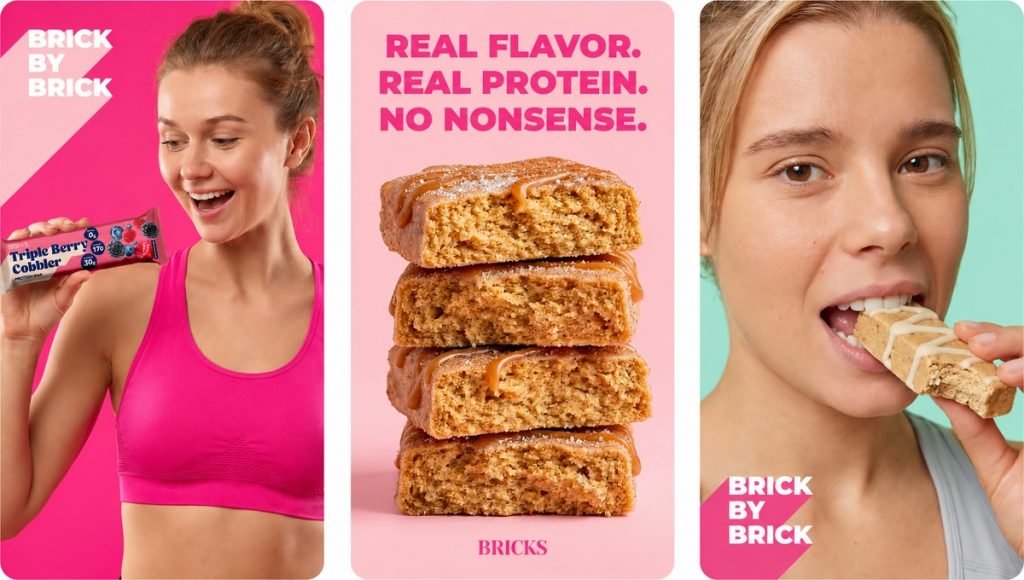
The visual identity and messaging should remain consistent throughout these promotional activities. Whether a customer sees the product in a store, on a product page, or through a social media post, the same core brand elements should make the experience feel connected and recognizable.
Social Media and Digital Marketing
Social media gives food brands a way to show products in real-world contexts while communicating their personality and values. Product photography, short-form content, educational posts, campaigns, and customer content can all support awareness and engagement.
Digital marketing can also extend the brand beyond social platforms through email campaigns, paid advertising, content marketing, and other online channels. Consistent visuals and messaging help ensure that promotional content feels like part of the same brand rather than a collection of unrelated campaigns.
Influencer Marketing
Influencer partnerships can introduce food products to audiences that already have an interest in a particular category, lifestyle, or type of product. The most effective partnerships should make sense for both the brand and the creator’s audience rather than relying only on follower numbers.
Product presentation should also remain consistent when influencers or creators feature the brand. Clear guidelines can help maintain recognizable packaging, visual elements, and messaging while still allowing creators to present the product in an authentic way.
Retail and E-Commerce
Retail presentation gives food brands an important opportunity to capture attention and communicate key information quickly. Packaging, shelf placement, displays, and supporting materials should work together to create a clear product experience.
E-commerce requires the same consistency in a different environment. Product images, descriptions, comparison graphics, and other digital assets should reinforce the identity established through the physical packaging. This helps customers recognize the product when they move between retail and digital channels.
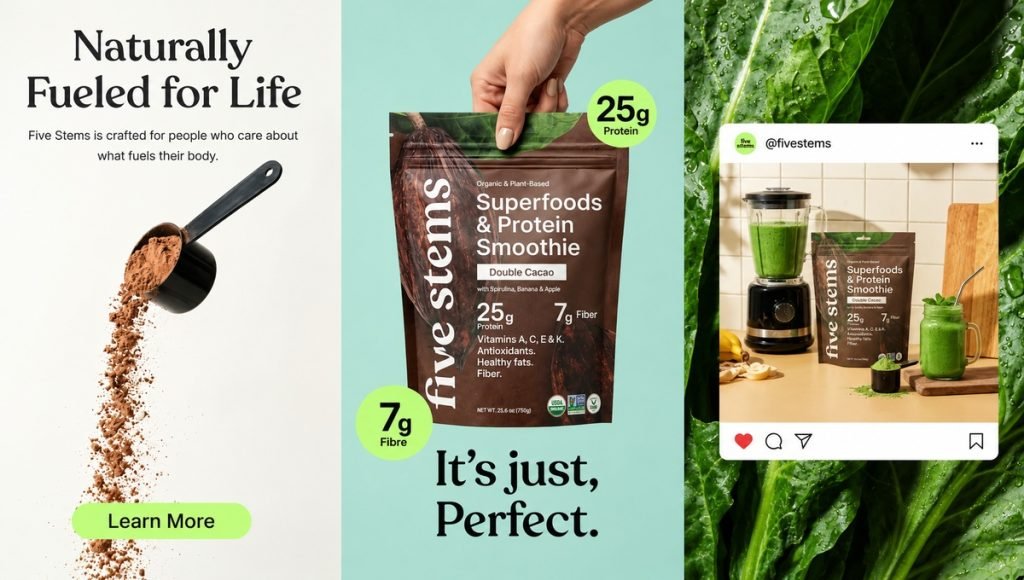
1. Five Stems: Superfood Protein Smoothie
Five Stems is a superfood protein smoothie brand built around nutrition and convenience. The product sits within the better-for-you food space, giving the brand an opportunity to communicate nutritional value while creating a visual identity that feels contemporary and approachable.
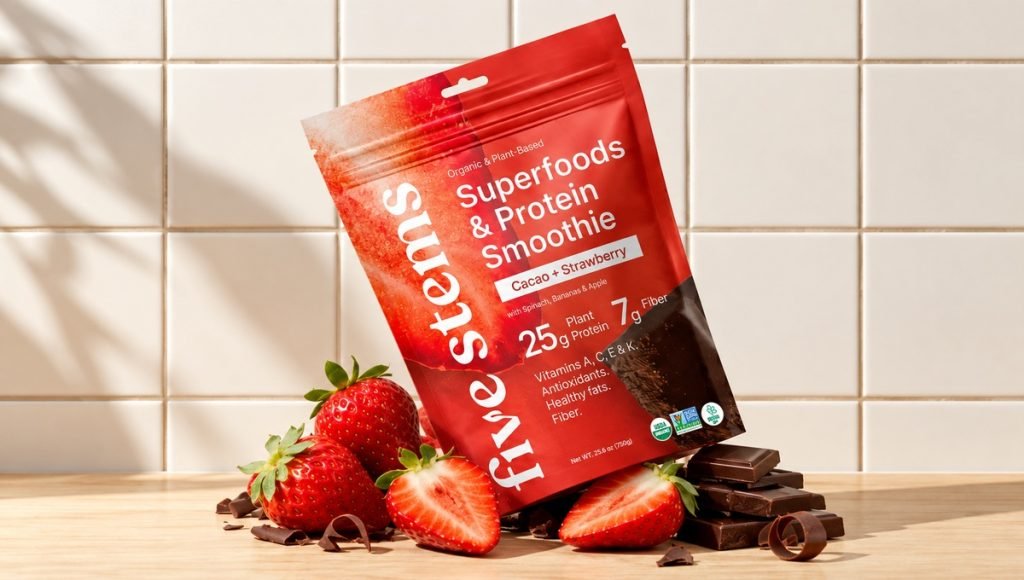
The branding and packaging work together to make the product category clear while giving Five Stems its own recognizable presence. The system creates a distinctive identity that can carry across the product range and other brand applications.
- Clear proposition: superfood and protein
- Distinctive identity: recognizable visual system
- Packaging focus: clear product presentation
- Scalable system: built for product growth
The result is a food brand that connects its nutritional positioning with a cohesive visual system, showing how strategy and design can work together to make a better-for-you product easier to recognize.
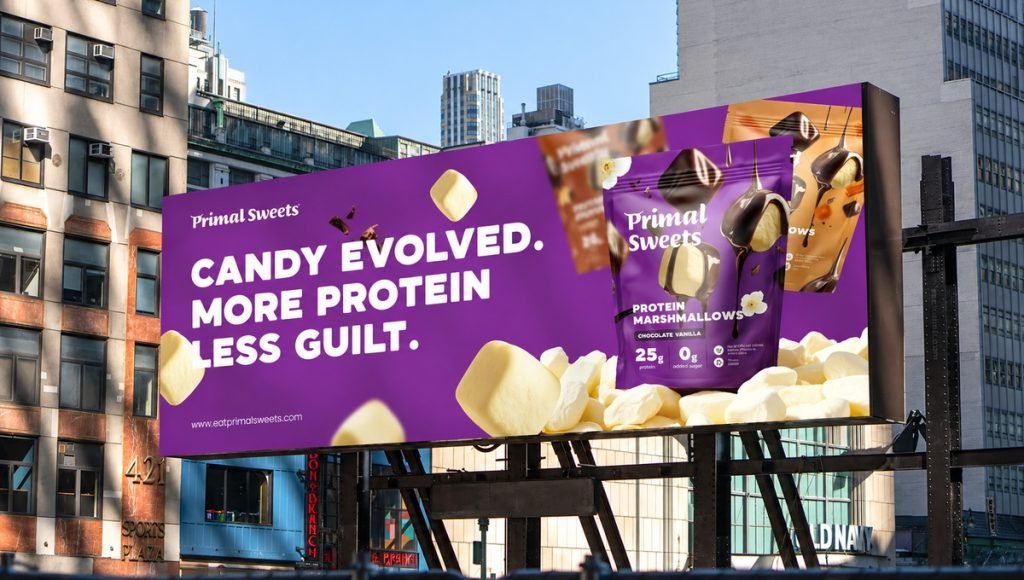
2. Primal Sweets: Protein Marshmallows
Primal Sweets takes a familiar food format and positions it around protein-focused nutrition. The product creates an interesting branding challenge: communicate the nutritional proposition while keeping the product approachable and appealing rather than making it feel like a conventional supplement.
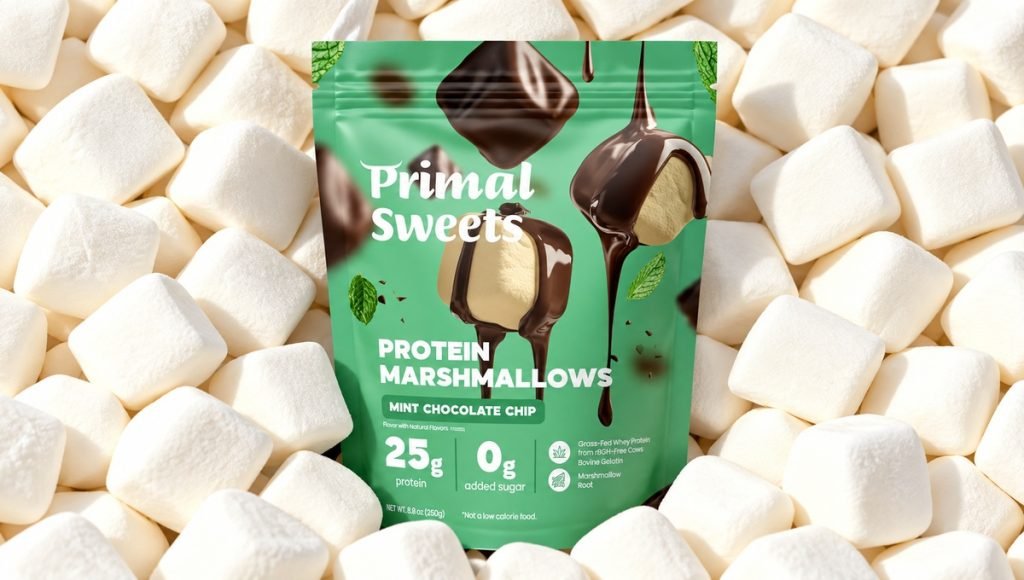
The identity and packaging give the brand a distinctive character within the protein snack category. This helps the product communicate its proposition quickly while creating a consistent visual experience across its brand touchpoints.
- Unique positioning: protein marshmallows
- Distinctive personality: memorable brand character
- Strong packaging: clear shelf presence
- Category clarity: easy product understanding
Primal Sweets demonstrates how food branding can create differentiation by combining an unexpected product concept with a clear identity and packaging system.
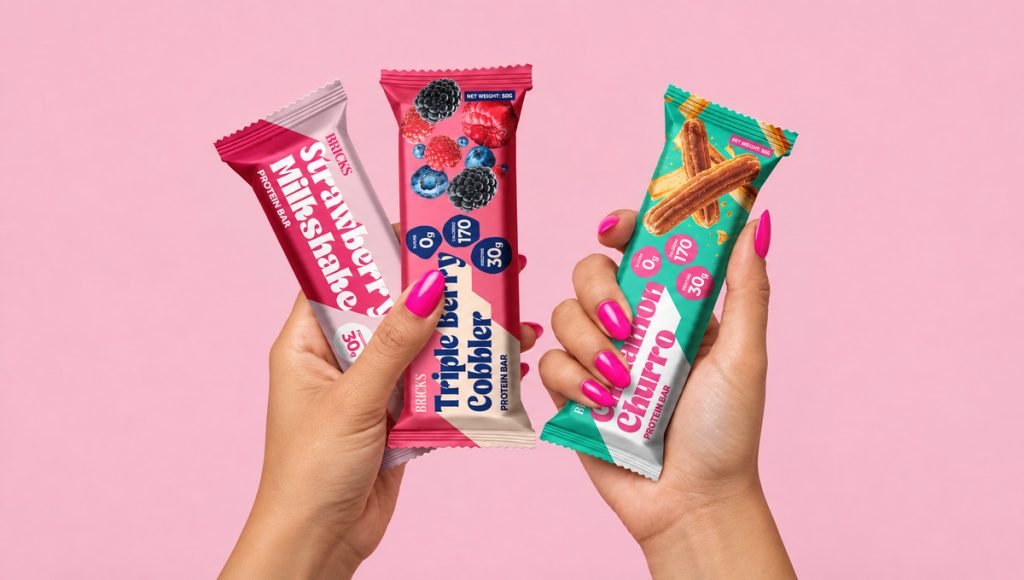
3. Bricks Protein
Bricks Protein operates within the protein snack category, where many products compete around similar nutritional benefits. The visual identity needs to create recognition while making the product’s positioning easy to understand.
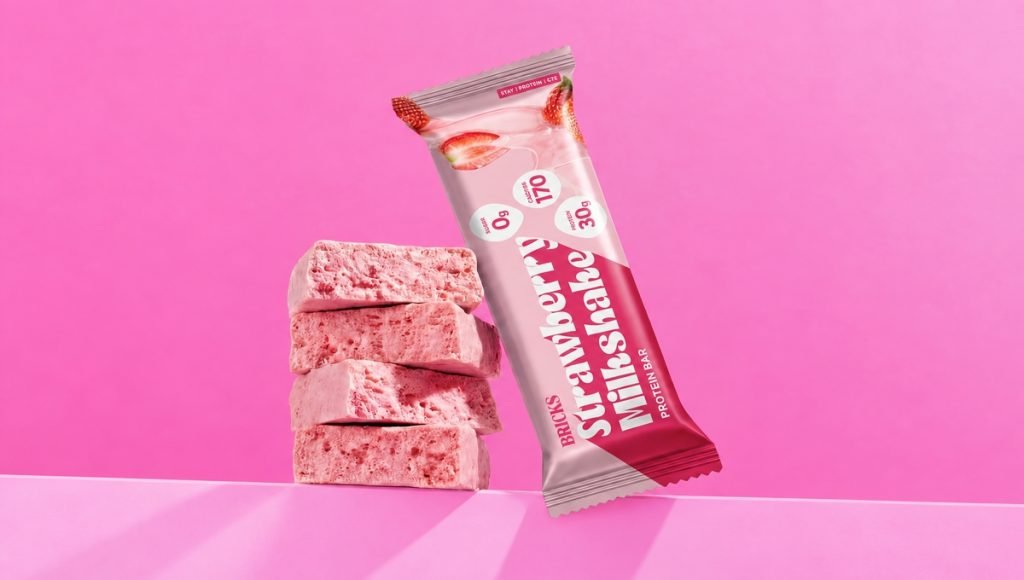
The branding system gives Bricks Protein a cohesive visual direction that can be applied across packaging and other brand applications. This consistency connects the individual product with the wider brand rather than making the packaging feel like an isolated design piece.
- Focused positioning: protein snack category
- Cohesive packaging: consistent product system
- Distinctive direction: recognizable visual language
- Brand scalability: supports future growth
Bricks Protein shows how a focused position and consistent visual system can help a food product build recognition in a competitive category.
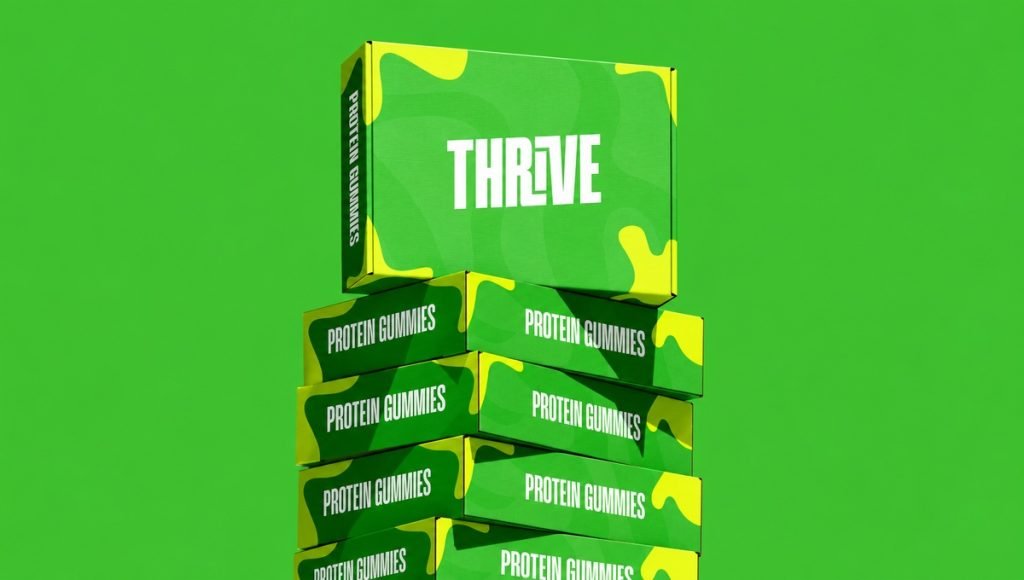
4. Thrive: Protein Gummy
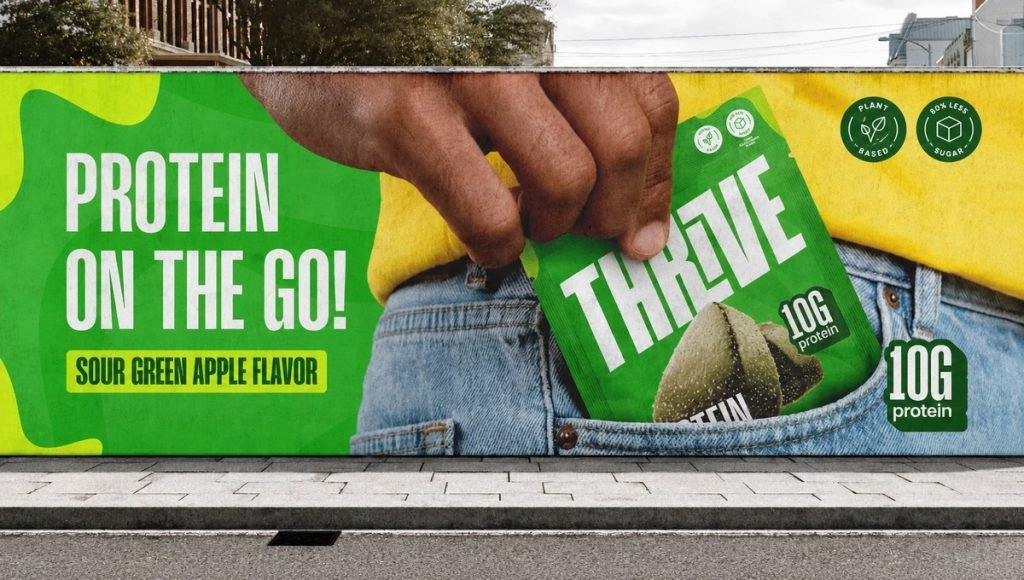
Thrive approaches functional nutrition through a protein gummy product, creating a different branding opportunity from traditional protein products. The product combines a familiar food format with a nutrition-focused proposition, making clear communication particularly important.
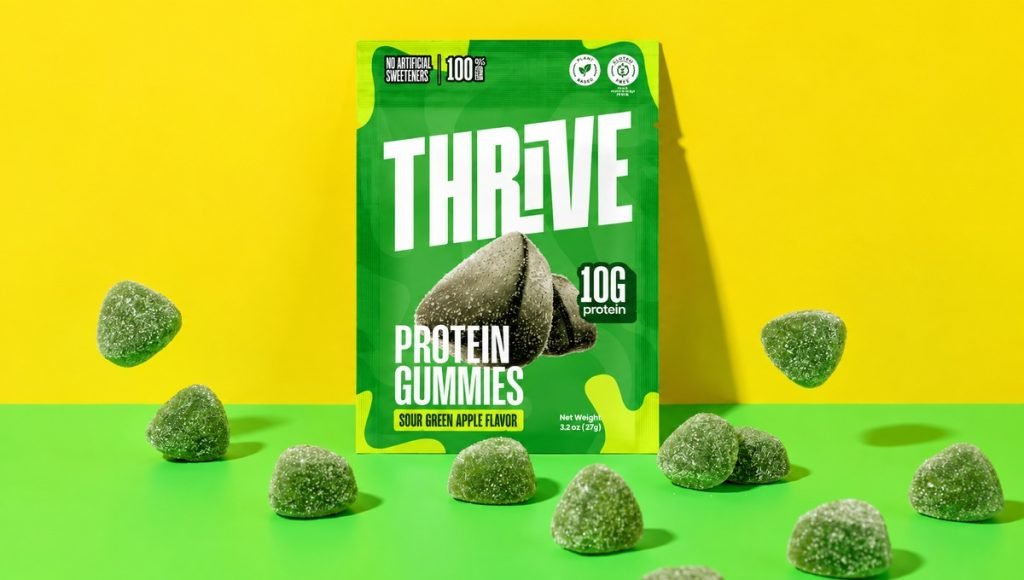
The branding uses design to bridge the gap between the product’s functional positioning and its approachable format. The result is a brand system that communicates the product proposition while maintaining consistency across packaging and digital experiences.
- Distinctive format: protein gummy
- Functional positioning: nutrition-focused product
- Approachable design: accessible visual direction
- Consistent experience: packaging and digital
Thrive demonstrates how a clear product proposition can guide the branding process and help create a recognizable identity around a less conventional food format.
Common Food Branding Mistakes
Food branding can lose its impact when individual design decisions are made without a clear strategy behind them. A visually attractive logo or package does not automatically create a strong brand if the positioning, messaging, and customer experience do not support the same idea. These disconnects can make products harder to recognize and reduce clarity across different touchpoints.
Another common issue is treating branding as a one-time project rather than a system that needs to work as the business grows. New products, packaging variations, marketing campaigns, and digital channels should still feel connected to the original brand. Building a flexible foundation from the beginning makes it easier to maintain consistency as the product range and customer base expand.
Designing Without Clear Positioning
A brand should have a clear reason for existing before visual decisions are finalized. Without defined positioning, the identity can become generic or rely on trends that do not communicate anything specific about the product.
Treating Packaging as a Separate Project
Packaging is one of the most visible expressions of a food brand, so it should not feel disconnected from the wider identity. Using different visual styles across packaging, website, and marketing can weaken recognition.
Trying to Appeal to Everyone
Trying to appeal to every possible customer can make a brand feel vague. A stronger approach is to understand the target audience and build the identity around the needs, expectations, and preferences of the people the product is actually designed for.
Changing the Brand Too Often
Constantly changing logos, colors, packaging, or messaging can make it difficult for customers to build recognition. Brands can evolve when needed, but changes should strengthen the existing system rather than remove the elements customers already associate with the product.
How Food Brands Grow Over Time
Food branding should be built with growth in mind from the beginning. As a business introduces new products, expands its product range, enters new channels, or reaches new audiences, the brand needs to remain recognizable while adapting to new requirements. A flexible brand system makes it easier to extend the identity across new products and touchpoints, including snack packaging design, without losing the qualities customers already associate with the brand.
Growth can also create opportunities to refine the brand based on real customer feedback and market changes. Packaging, messaging, and other brand elements can evolve as the business learns more about its audience, but these updates should remain connected to the core positioning and identity.
Expanding the Product Range
New products should feel like part of the same brand while remaining easy to distinguish from existing products. A consistent packaging system can provide shared visual elements while allowing different flavors, formats, or product benefits to have their own variations.
Updating Packaging
Packaging may need to change as products enter new markets, requirements evolve, or the brand develops. Updates should improve clarity and relevance while preserving recognizable elements that help customers identify the product.
Maintaining Brand Consistency
As more people and teams become involved in marketing and product development, clear brand guidelines can help maintain consistency. They provide practical direction for using logos, colors, typography, imagery, messaging, and other design elements across different applications.
Adapting to New Channels
A food brand may appear on retail shelves, e-commerce platforms, social media, websites, advertising, and other digital experiences. The identity should be flexible enough to work across these formats while maintaining a consistent overall brand experience.
Conclusion
Food branding brings strategy, identity, packaging, messaging, and customer experience together to create a recognizable product. A strong brand does more than make a food product look appealing. It gives customers clear reasons to understand, remember, and connect with the product while creating consistency across different touchpoints.
The most effective approach starts with clear positioning and carries that strategy through every part of the brand. From visual identity and packaging to retail, e-commerce, and digital marketing, each element should support the same overall direction. With a flexible system in place, food brands can build recognition, differentiate their products, and evolve as their business grows.
Frequently Asked Questions About Food Branding
What Is Food Branding?
Food branding is the process of creating a recognizable identity for a food product or company. It includes strategy, visual identity, packaging, messaging, and other elements that shape how customers perceive and remember a brand.
Why Is Food Branding Important?
Food branding helps products stand out in competitive categories and gives customers recognizable cues across different touchpoints. Consistent branding can also build familiarity and make a product easier to understand.
What Are the Key Elements of Food Branding?
The key elements can include brand strategy, positioning, logo design, color, typography, imagery, packaging design, brand voice, and messaging. These elements should work together as one consistent brand system.
How Does Packaging Support Food Branding?
Packaging is one of the most visible expressions of a food brand. It communicates important product information while reinforcing the visual identity and helping customers recognize the product across retail and e-commerce channels.
How Can a Food Brand Build a Strong Identity?
A strong identity starts with clear positioning and an understanding of the target audience. From there, the brand can develop a consistent visual system, packaging, messaging, and customer experience that all support the same direction.