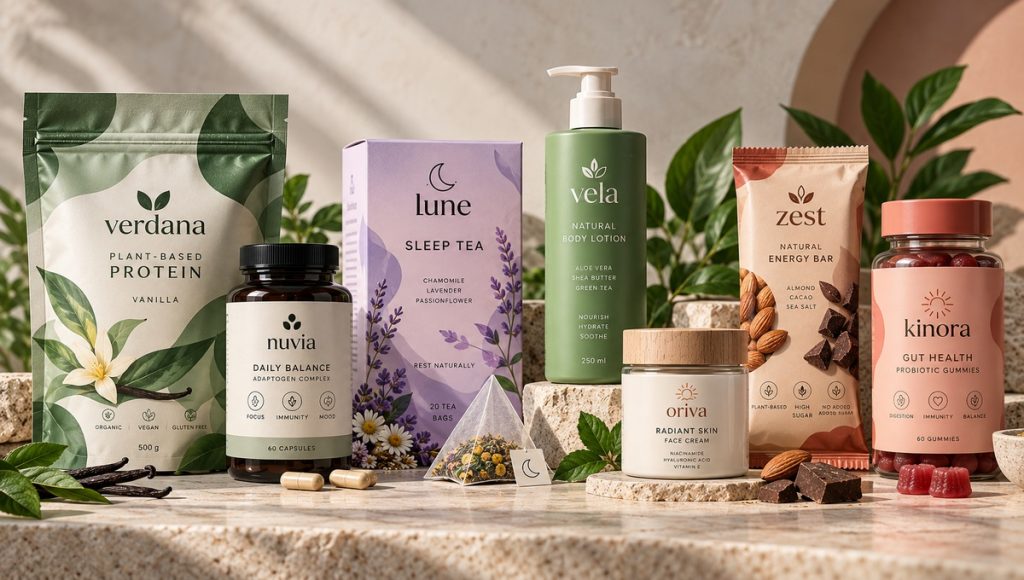
Snack packaging does much more than hold a product. It helps protect snacks from moisture, light, and other factors that can affect freshness, while also shaping how consumers notice and understand a brand. The right packaging should combine protection, convenience, and visual appeal so the food remains practical to store, carry, and enjoy.
For snack brands, packaging also plays an important role in shelf visibility and recognition. Strong design, clear information, and distinctive graphics can help snacks stand out in a crowded snack market, while resealable options and other practical features can improve convenience for customers. This guide explores snack packaging formats, materials, sustainability, branding, and design decisions that can support both the food and the business behind it.
What Makes Effective Food Packaging for Snack Brands?
Effective food packaging should protect snacks and their contents while making them easy to recognize, understand, and use. For snacks, this often means maintaining freshness, supporting an appropriate shelf life, and providing enough protection against moisture, oxygen, light, or physical damage. Features such as strong seals and resealable closures can also improve convenience, especially for packs intended for repeated consumption.
The visual side is just as important. Snack packaging should communicate what is inside, highlight relevant benefits, and create a clear connection with the brand. Strong typography, distinctive colors, and well-organized information can improve shelf visibility and help customers compare options quickly. Effective packaging therefore balances function and design while keeping important information easy to read.
Design Needs Across Snack Food Categories
Different snack types require different packaging decisions because texture, portion size, storage needs, and eating occasions can vary significantly. A strong system should respond to these practical requirements while still creating consistency across different snacks, flavors, formats, and sizes. Snack food packaging should also make each variety easy to read and recognize.
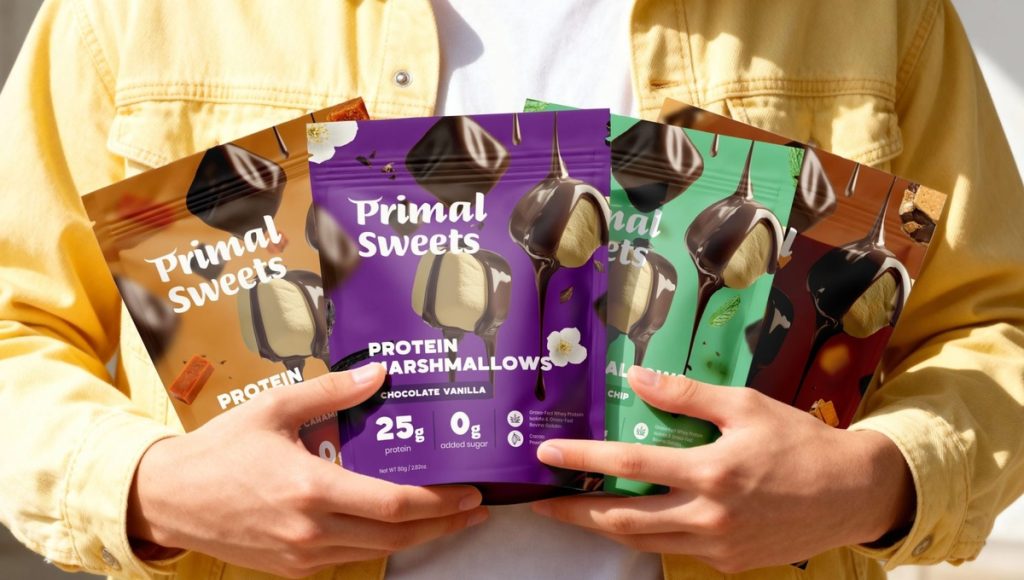
The design should help consumers understand what makes each option different without losing the connection to the wider range. Clear visual cues, consistent typography, and a repeatable layout can make it easier to distinguish products while keeping the overall packaging system cohesive as the lineup grows.
Protein and Functional Snacks
Protein bars, bites, gummies, and other functional snacks often need snack packaging that communicates nutritional benefits quickly. Clear hierarchy helps consumers identify the snack type, protein content, flavor, and key features without searching through too much information. The design should feel credible while still giving the range a distinctive personality.
Chips and Savory Products
Chips and similar savory snacks need packaging that protects fragile contents while supporting strong shelf presentation. Flexible formats are common because they can accommodate different fill volumes and provide enough surface area for labels and vibrant graphics. Moisture and oxygen control are also important when the goal is to protect taste, texture, and freshness.
Nuts, Granola and Trail Mix
Nuts, granola, and trail mix are snacks often sold in pouches that support portability and repeated use. A stand up pouch can work especially well because it offers convenient storage, useful shelf presence, and enough space for print and product information. A resealable feature can make these pouches even more practical after opening.
Candy, Cookies and Better-for-You Snacks
Candy and cookies are sweet snacks that often rely on bold visual impact, while better-for-you snacks may need more space for nutritional information, vegan positioning, or ingredient communication. In both cases, snack packaging should make the main message easy to read while using color, typography, and imagery to distinguish the range from competing options.
Packaging Formats for Different Snack Products
The right snack packaging format depends on portion size, storage needs, distribution, and the way snacks will be displayed or consumed. Bags, pouches, wraps, cartons, jars, and cups can all serve different purposes. There is no single perfect format, so brands should choose a structure around the food, sales channel, and customer experience.
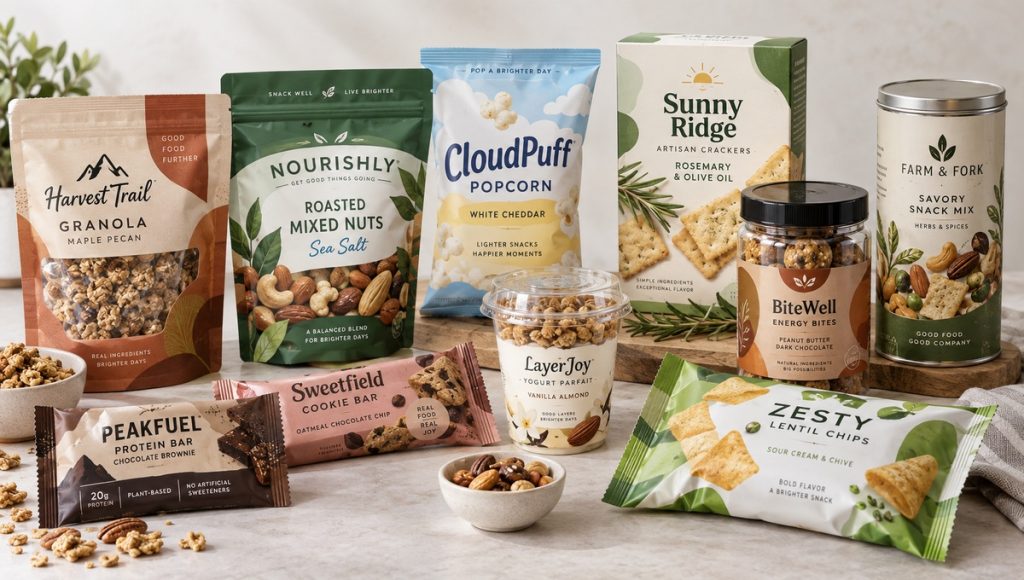
The format also affects how much space is available for branding, product information, and visual communication. Choosing the right structure can make the package easier to handle, improve presentation, and create a more consistent experience across retail and e-commerce channels.
Stand Up Pouch
A stand up pouch is a versatile choice for snacks such as granola, popcorn, nuts, and trail mix. Its upright form creates useful shelf presence while leaving enough surface area for print, nutritional details, and visual communication. Many pouches also include a resealable closure, which is useful for multi-serve snacks.
Flow Wrap and Bar Wrappers
Flow wraps are commonly used for individually portioned snacks such as protein bars and cookies. Flexible film can carry bold graphics and important information while creating a compact pack that is easy to store and transport. Rollstock can support form fill seal production, where film is formed, filled, and sealed around the food. This form fill process can improve efficiency when individual packs need to be filled at a consistent standard.
Single-Serve and Multi-Serve Packs
Single-serve bags support portion control and on-the-go consumption, while larger bags and pouches can work well for snacks intended for shared or repeated use. Multi-serve formats often benefit from a reliable seal or resealable closure so the contents remain protected and freshness is easier to maintain after opening.
Boxes, Cartons, Jars and Cups
Boxes and cartons can provide additional structure for snacks that may crush easily while creating broad print surfaces for information and visual design. Rigid plastic jars are shatter-resistant and can provide high product visibility when a clear format is used. Tin canisters provide an absolute barrier against light and moisture.
Preformed cups offer customizable barrier properties for certain snacks and can be useful when portion control or structural stability is important. Pillow pouches are also among the most frequently used pouch forms for snack food because they provide a simple structure that can work across a variety of applications.
Choosing Materials and Flexible Packaging for Snack Products
For snacks, material choice affects protection, usability, print quality, durability, and how well packaging performs throughout storage and distribution. Flexible packaging is widely used because film, bags, and pouches can be adapted to different formats while using relatively little material. The right structure should also limit exposure to moisture and oxygen when those factors could affect the food. Similar material and structural decisions also play an important role in wellness packaging design, where functionality needs to support both the product and the brand.
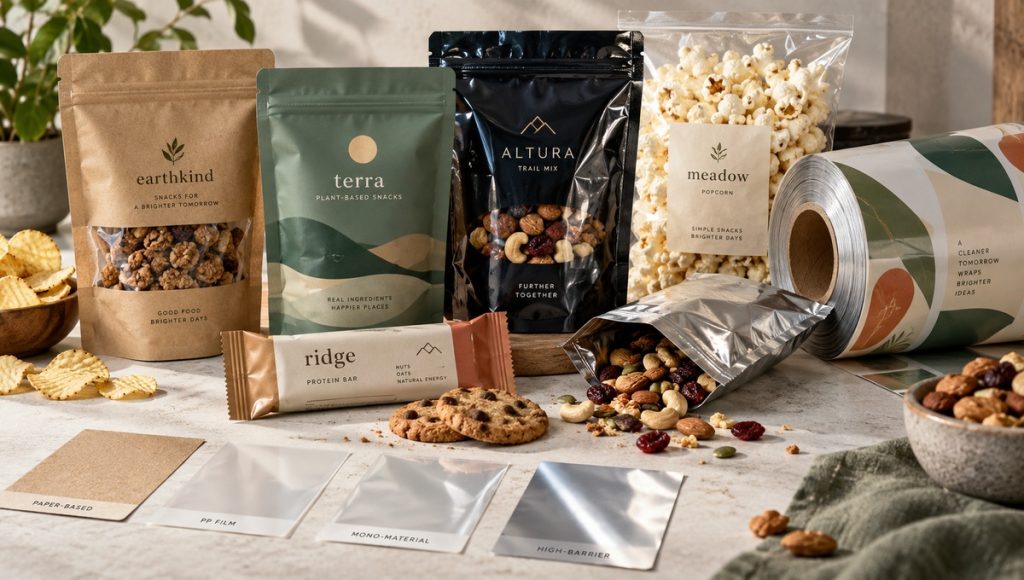
Material selection can also influence how the packaging feels in the hand, how well it seals, and how clearly branding and product information are reproduced in print. The best option should support both the technical needs of the snack and the visual experience consumers expect from the package.
Matching Materials to the Product Format
Different snacks and other foods place different demands on packaging materials. Lightweight film may work well for snacks such as chips, cookies, or individual portions, while thicker structures can provide more support for larger bags and multi-serve pouches. High-barrier film can limit exposure to air and moisture, which extends shelf life for suitable foods. Some rollstock options are also ready for form fill seal lines when higher production efficiency is required.
Paper-Based and Flexible Options
For some snacks, paper can be useful when tactile feel, print surface, or a more natural presentation is important. Paper packaging can be biodegradable in certain applications, while coatings or layered structures may provide moisture barriers. High-barrier paper solutions reduce plastic content while offering adequate protection.
Flexible packaging provides lightweight options for a wide variety of snacks. PP, or polypropylene, is one of several film materials used in flexible structures, depending on the required performance. Brands should choose each film based on the food, barrier requirements, print needs, and intended seal.
Recyclable and Mono-Material Choices
For snacks, recyclable films, mono-material structures, and post-consumer recycled content can all play a role in more responsible packaging strategies. Mono-material formats can simplify recycling, while post-consumer recycled content can lower greenhouse gas emissions compared with equivalent virgin-material formats, depending on the material and production system.
Companies should also consider the source of paper and recycled content when evaluating different options. The goal is to make better material choices without compromising the performance required to protect the food.
What Snack Brands Should Consider Before Designing Packaging
Before visual design begins for snacks, companies should define the practical requirements the package needs to meet. Storage conditions, portion size, distribution, and consumer behavior can all influence the final direction. Unlike fresh produce, many dry snacks rely more heavily on moisture and oxygen barriers than on ventilation, so packaging decisions should match the needs of the food instead of following a generic formula.
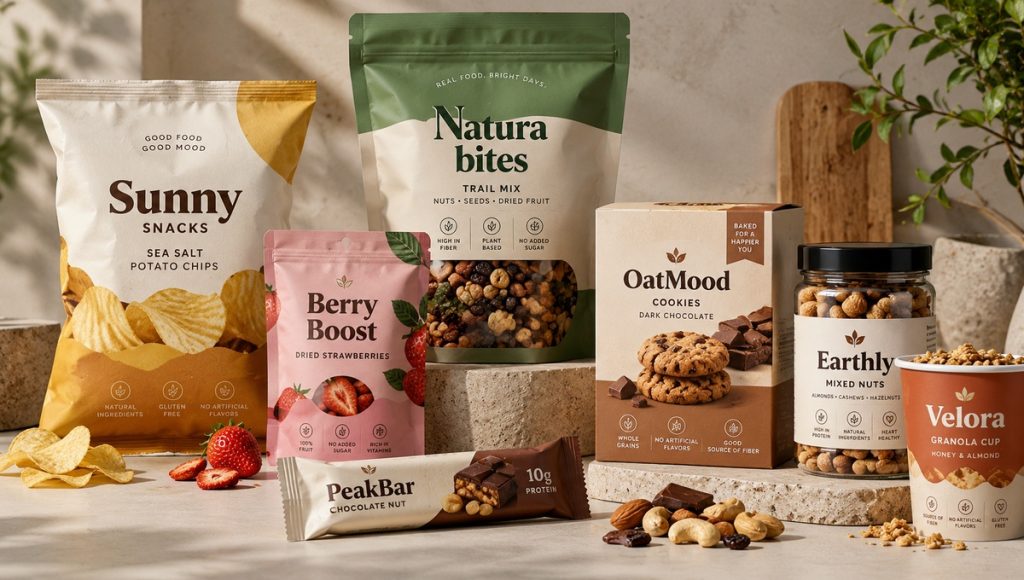
The chosen format should also reflect how the snack will be sold, carried, opened, and stored after purchase. Different audiences may expect different levels of convenience, portability, and portion control, which can affect both structure and presentation. Considering these factors early helps create packaging that feels intentional, practical, and aligned with the overall positioning of the snack.
Shelf Life and Seal Performance
Barrier performance and seal integrity matter when snacks can be affected by air, humidity, or storage conditions. Choosing a structure that limits exposure can help protect the contents and, depending on the food, extends shelf life while supporting expected taste and quality.
Portion Size and Convenience
For snacks, small bags can suit single servings, while larger pouches may benefit from resealable closures for repeated consumption. Resealability and portion control features enhance user experience and reduce waste.
Brand Positioning and Target Audience
Different snacks can require very different visual approaches. A high-protein snack, a premium treat, and a family-focused option may use similar packaging structures but communicate in different ways. Understanding the audience helps guide typography, imagery, claims, and overall tone so the design feels intentional rather than generic.
Sustainable Snack Packaging and Responsible Design Choices
Sustainability has become an important consideration across the snack market as companies look for ways to limit material use, improve recyclability, and respond to changing consumer expectations. Sustainable snack packaging still needs to perform its main job while making more responsible choices around structure, disposal, and material sourcing. These considerations are also relevant for functional nutrition products, where packaging needs to balance product protection, usability, and clear visual communication.
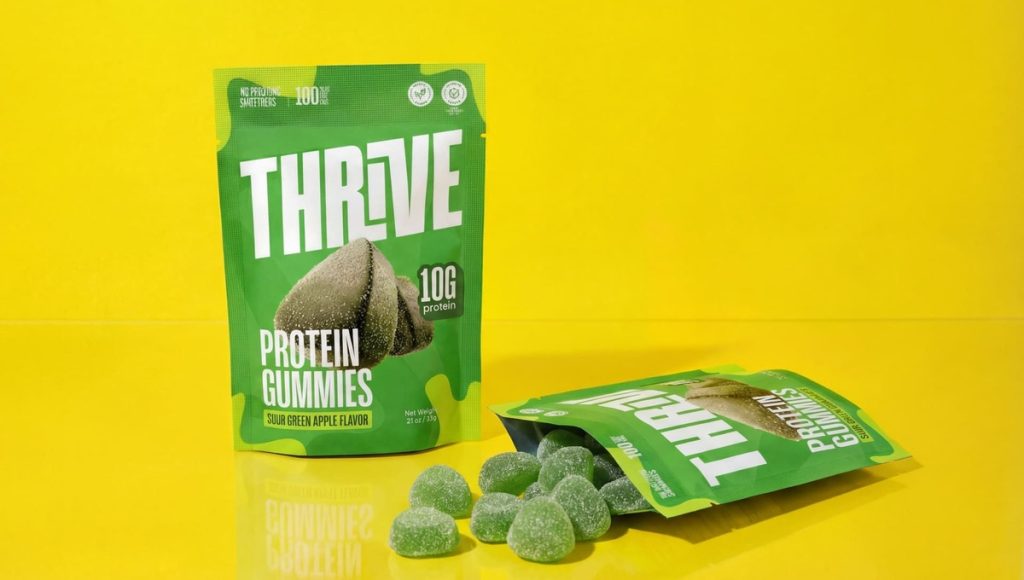
At the same time, packaging still needs enough visual impact to communicate the snack clearly and attract attention in retail and digital environments. This balance is especially important for functional snacks, where performance, usability, and strong brand presentation often need to work together.
Reducing Unnecessary Packaging
Using less material can limit waste and improve transport efficiency when packs are lighter and more compact. For snacks, companies can review whether every layer, component, or oversized format is necessary while still ensuring that the package performs during storage and distribution.
Choosing Materials With Sustainability in Mind
For snacks, recyclable film, mono-material structures, and paper-based options can all play a role depending on the required level of performance. Clear disposal instructions can help consumers understand what to do after use. Brands prioritize consumer values such as sustainability and ingredient transparency.
This makes it important for packaging claims and material choices to be communicated clearly and credibly. Minimalist design can emphasize simplicity and eco-friendliness when that visual direction genuinely reflects the material and sustainability strategy. Design should support the environmental message rather than make claims that the package cannot substantiate.
Balancing Sustainability With Functionality
For snacks, a more sustainable format still needs reliable seal strength and enough durability for transport and storage. Material reduction should not create additional waste through damaged or spoiled food. The goal is to balance environmental impact, efficiency, usability, and performance rather than prioritizing one factor at the expense of the others.
Packaging Design Principles That Strengthen a Snack Brand
Strong snack packaging should do more than look attractive. It should help consumers understand the offer quickly and distinguish one option from another in a crowded environment. Custom design can improve visibility, while clear information makes snack food packaging easier to read at a glance.
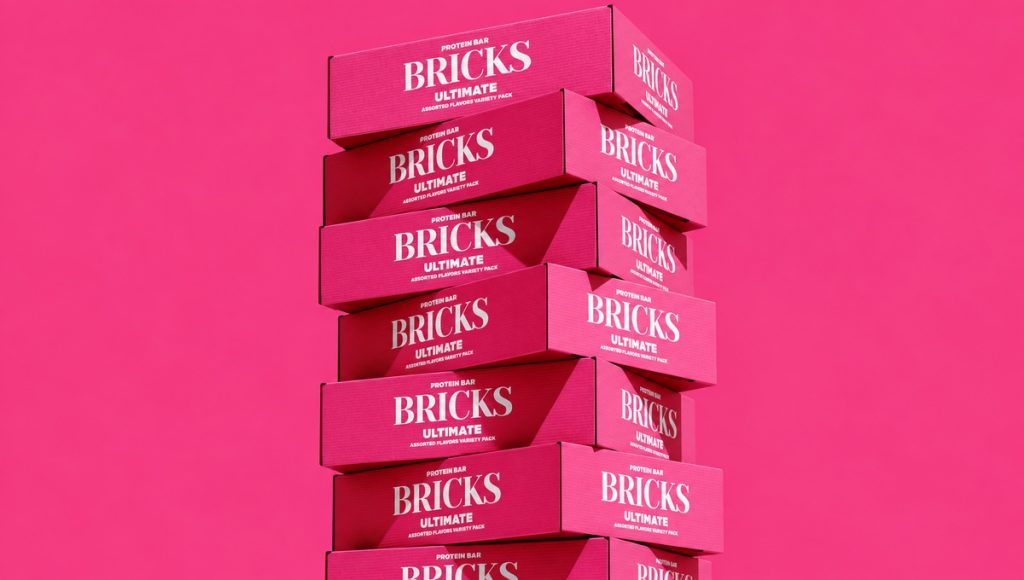
A strong visual system can also make the range easier to recognize across different formats and sales channels. Consistent typography, color, imagery, and layout help build recognition while still allowing individual products to feel distinct. This becomes especially important as a snack brand expands into new varieties, sizes, or product lines.
Create a Recognizable Visual Identity
A consistent brand identity helps connect different snacks within the same range. Color, typography, imagery, layout, and graphic style should work together so the packaging remains recognizable even when new varieties or formats are introduced.
Build a Clear Information Hierarchy
For snacks, the name, key benefits, net weight, and essential claims should follow a clear order. Good hierarchy helps consumers read the pack quickly without overcrowding the front panel or forcing important information into small areas.
Use Color and Typography Strategically
For snacks, bold type can improve visibility, while vibrant graphics can add energy and personality when they fit the positioning. Strong print quality is also important so fine details, text, and visual elements remain clear across different formats. Digital print can support customization, shorter runs, and greater variety where appropriate.
Differentiate Variants Without Losing Consistency
For snacks with multiple varieties, color coding, imagery, icons, or controlled layout changes can separate one option from another while keeping the overall system connected. This makes it easier for customers to recognize the range and compare options without making every pack look unrelated.
Designing Snack Packaging for Retail and E-Commerce
Snack packaging needs to work across physical and digital sales environments. In stores, shoppers may notice snacks from several feet away, while online they often see the pack first as a small image surrounded by competing options. The design should remain clear, recognizable, and ready for both retail shelves and e-commerce product grids.
Creating Strong Retail Impact
For snacks, clear typography, distinctive imagery, and a focused layout can help the package stand out beside competing bags and pouches. The goal is not simply to be louder, but to make important information easy to read while creating enough visual distinction to attract attention.
Designing for Online Product Thumbnails
For snacks sold online, key claims and recognizable visual elements should remain legible at reduced sizes. Strong digital presentation can help shoppers read important information, compare options efficiently, and understand the offer before reaching checkout. Clear food labeling information is also important online, helping consumers access accurate product details when making purchasing decisions.
Maintaining Recognition Across Channels
For snacks, typography, imagery, and layout should remain consistent whether the package appears in a store, on a marketplace, or on a direct-to-consumer website. Thoughtful design innovation can help a growing range adapt to new channels without losing the visual cues people already recognize.
Building a Packaging System That Can Grow With the Brand
As a snack company expands its range of snacks, its packaging system needs enough flexibility to support new launches without losing visual consistency. A scalable approach defines how typography, color, imagery, information, and structural formats work together across the range.
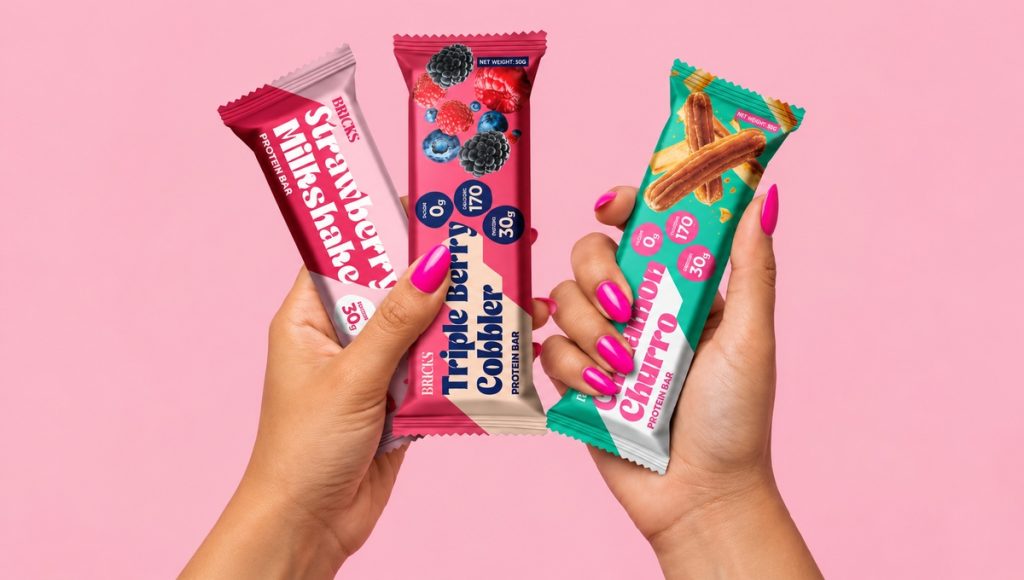
This makes it easier to introduce new flavors, sizes, or formats without redesigning the entire system from scratch. Clear visual rules also help each new SKU feel distinct while remaining connected to the wider range. A well-structured packaging system can therefore support growth while keeping the brand recognizable across retail, e-commerce, and future product extensions.
Managing Multiple SKUs
For multiple snacks, core visual elements should remain consistent, while selected details can change to distinguish individual offerings. This approach can work across pouches, bags, cartons, and film-based formats while keeping the range connected and easier for a design team to manage.
Keeping Sizes and Variants Consistent
Visual variation should follow a defined logic. Color coding, naming conventions, and information placement can separate one option from another without making the lineup feel disconnected. A repeatable design standard can also improve efficiency when preparing additional packaging for retail or digital channels.
Planning for Future Extensions
A strong system should leave room for new snacks, new food formats, and changes in demand. Thinking ahead makes it easier to introduce additional offerings without rebuilding the visual system each time. The right design partner can help establish flexible rules that support innovation and help the company achieve a more unified presence as the range expands.
Final Thoughts for Snack Brands
Effective snack packaging should bring together visual clarity, functionality, and a structure suited to how snacks will be stored, displayed, and sold. From lightweight film and pouches to paper-based formats and larger bags, the right choice depends on the food category, sales channel, and experience the company wants to create for consumers.
For growing snack businesses, the strongest systems also leave room for future innovation. Clear design standards make it easier to introduce new formats, expand into additional food categories, and keep snacks recognizable as demand changes. When strategy, structure, and visual communication work together, packaging can support both immediate retail performance and long-term growth.
Frequently Asked Questions About Snack Packaging
What Is the Best Snack Packaging for Different Types of Snacks?
The best snack packaging depends on the food, portion size, storage needs, and sales channel. Stand-up pouches work well for granola, nuts, and popcorn, while flow wraps are common for protein bars and cookies. Bags, cartons, jars, and cups can also work when they provide the right balance of protection, usability, and presentation.
How Does Snack Packaging Help Keep Food Fresh?
Snack packaging helps protect food from moisture, oxygen, light, and physical damage that may affect quality over time. Barrier films, reliable seals, and resealable closures can help protect the contents and support a suitable shelf life, depending on the snack and storage conditions.
Is Sustainable Snack Packaging Suitable for Every Snack?
Sustainable snack packaging can work for many applications, but it still needs the required barrier performance, seal strength, and durability. Recyclable films, mono-material structures, and paper-based options can reduce environmental impact when they still provide suitable protection for the food.