Gummy packaging design combines product protection, visual appeal, and clear communication to help gummy products stand out in a competitive market. From traditional gummy candies to protein gummies and dietary supplements, effective packaging protects product quality while creating a recognizable brand identity. A well-designed package also makes flavors, product benefits, and essential information easy for customers to understand at a glance.
The right packaging materials, formats, colors, and graphics influence how customers perceive a product on retail shelves and online. A consistent packaging system also helps brands differentiate product variations while maintaining a unified visual identity. This guide explores gummy packaging options, essential design principles, and real examples from BeMain Studio’s work on Thrive and Zupz.
What Is Gummy Packaging Design?
Gummy packaging design is the process of developing packaging that protects gummy products while communicating their identity, flavor, and benefits. It combines packaging materials, structural formats, typography, colors, and graphics to create a presentation that is both functional and visually appealing.
Unlike many other packaged foods, gummies require careful protection against moisture, heat, and oxygen, which can affect their texture, appearance, and freshness. The design must also reflect the product category, whether it involves traditional candies, protein gummies, or dietary supplements.
Effective gummy packaging helps customers identify the product, understand its key features, and recognize the brand across different retail and digital environments. A well-designed packaging system also creates consistency across flavors and product variations while helping each option maintain its own distinct identity.
Common Gummy Packaging Formats
Gummy packaging comes in different formats, each offering specific advantages for product protection, convenience, and visual presentation. Choosing the right format depends on the type of gummies, serving size, target audience, and how the product will be displayed or used. The right packaging format should also provide enough space for clear branding and essential product information while supporting a positive customer experience.
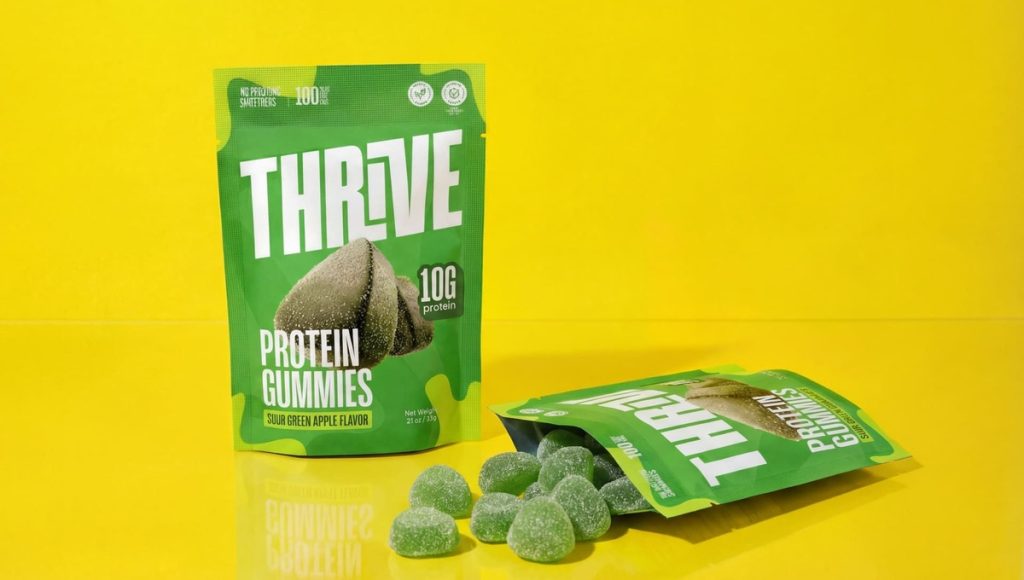
From flexible pouches to rigid containers, packaging design should balance functionality with a recognizable brand identity. The chosen format also determines how much space is available for graphics, product details, and important labeling information.
Resealable Pouches and Flexible Bags
Resealable pouches are a popular choice for gummy candies, protein gummies, and other functional products. Stand up pouches offer a large printable surface for vibrant colors, product imagery, and branding, while their upright structure makes them suitable for retail shelves and e-commerce photography.
Flexible packaging can use plastic films, foil laminates, or other materials selected for their barrier properties. A properly sealed pack helps protect gummies from moisture and oxygen, while a resealable zipper makes it easier for customers to close the packaging after opening.
Bottles, Jars and Boxes
Bottles and jars are commonly used for gummy vitamins and dietary supplements, offering a familiar format for products taken regularly. Plastic containers, including PET and HDPE options, can provide durable protection while allowing brands to communicate dosage instructions, benefits, and product details through clearly designed labels.
Cardboard boxes can provide additional branding space and are often used alongside an inner pouch or another protective container. Custom shapes, finishes, and packaging artwork can help differentiate products, but the final design should remain practical for storage, shipping, and everyday use.
Real Gummy Packaging Design Examples: Thrive and Zupz
Real gummy packaging projects show how visual identity, product positioning, and packaging design work together to create a recognizable product. BeMain Studio’s work on Thrive and its evolution into Zupz demonstrates how a protein gummy brand can develop a distinctive identity while adapting to new branding and product needs.
Thrive: Protein Gummy Branding and Packaging
Thrive was created to introduce protein gummies as an enjoyable alternative to conventional protein snacks. The challenge was to develop a distinctive brand identity that communicated nutritional benefits while moving away from the technical appearance often associated with sports nutrition products.
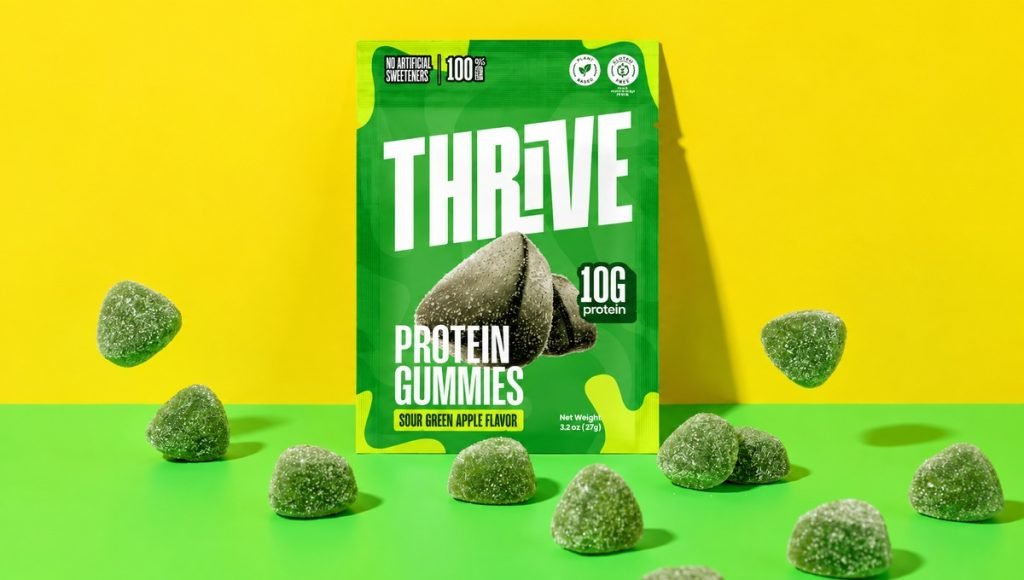
BeMain Studio developed a bold packaging system built around energetic colors, approachable typography, and expressive visual elements. The designs balance a playful personality with clear product messaging, creating a cohesive identity suitable for retail shelves and digital applications.
- Bold visuals that stand out from traditional protein products
- Clear communication of the protein gummy concept
- Consistent packaging across flavors and product variations
- Eye-catching artwork for retail shelves and e-commerce
Thrive demonstrates how creative packaging can make functional nutrition feel more approachable without losing product clarity. Its recognizable visual system provided a foundation for presenting protein gummies as both a convenient nutritional product and an enjoyable snack.
Zupz: Packaging and Brand Evolution
Zupz represents the next chapter of the original Thrive Candy brand, introducing a refreshed identity for its protein gummies. The new direction embraces a more expressive candy-inspired appearance while keeping the product’s nutritional positioning easy to understand. This evolution also introduces a bolder visual personality that helps Zupz stand out in the competitive protein snack market.
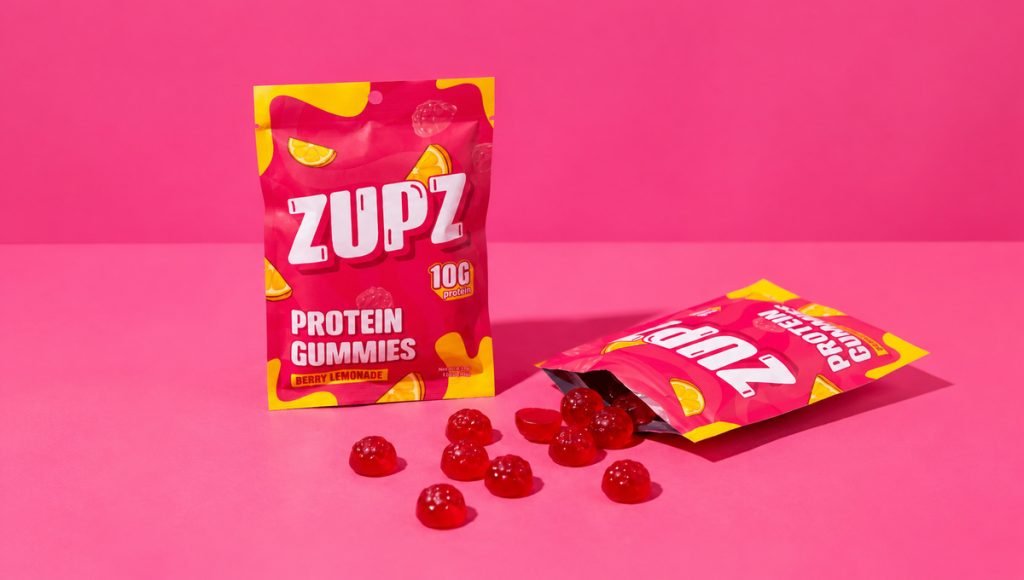
The packaging uses vibrant pink and yellow colors, oversized white lettering, and playful fruit illustrations to create an energetic visual identity. Its Berry Lemonade pouch prominently displays the product name and 10g protein callout, combining strong branding with clear information about the product.
- Vibrant pink and yellow colors for strong visual impact
- Oversized ZUPZ lettering for instant brand recognition
- Prominent 10g protein callout for clear product communication
- Playful fruit illustrations that highlight flavor and personality
Zupz shows how gummy packaging can evolve to express a stronger personality while preserving clarity around the product’s benefits. The combination of expressive artwork, recognizable branding, and accessible messaging gives the brand a distinctive presence in the protein snack category.
Gummy Packaging Materials, Freshness and Usability
As with food packaging design more broadly, choosing the right materials is essential for preserving the texture, flavor, and quality of gummy products. Plastic films such as PE offer moisture resistance, while PET provides strength and structural support. Foil laminates can provide stronger barrier properties against oxygen and light, helping protect gummies from conditions that may affect their freshness. Flat bags are another option when a slimmer, simpler presentation is preferred.
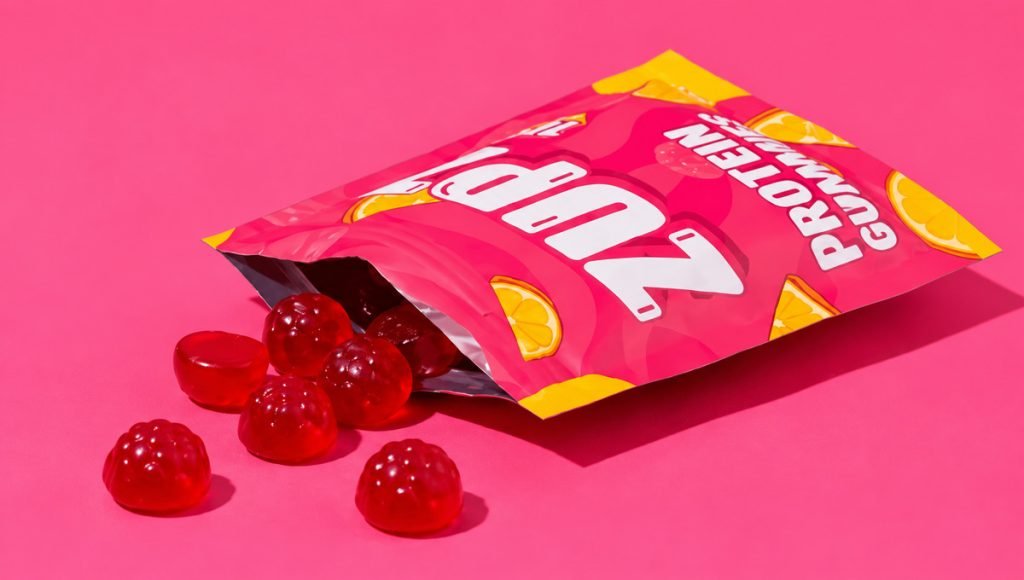
An effective seal is equally important for product safety and protection. Heat sealing helps limit unwanted moisture, air, and contamination from entering the pack before it is opened. Poor sealing can contribute to sticky gummies, changes in texture, and spoilage. Resealable closures improve convenience after opening, but they should not replace a reliable initial seal. Choosing the right combination of barrier material and closure is essential for reliable packaging.
Sustainable packaging solutions are another consideration for brands looking to reduce environmental impact. Recyclable films and recycled-content materials may offer alternatives, provided they meet food-contact requirements and maintain adequate protection. The best material choice should balance functionality, packaging design, usability, and cost, since some higher-barrier options may increase unit costs while supporting a consistent brand image.
Key Elements of Effective Gummy Packaging Design
Effective gummy packaging design combines clear messaging, strong visual identity, and thoughtful product presentation. As with snack packaging design, every element should help customers quickly understand what the gummies offer while creating a recognizable appearance that stands out in a competitive market.
The strongest packaging designs balance creativity with functionality. From typography and product details to flavor differentiation and digital presentation, each decision should support the overall identity and make the packaging easy to recognize.
Clear Product Information and Visual Hierarchy
A strong visual hierarchy helps customers identify the product type, flavor, and key benefits at a glance. Important product details should be organized through readable typography, appropriate spacing, and clear contrast, allowing the most relevant information to grab attention without overwhelming the design.
Front-of-pack messaging should prioritize what matters most to the target audience, whether that is protein content, functional benefits, or flavor. Supporting information, such as ingredients and serving instructions, should remain easy to read while meeting applicable labeling requirements.
Flavor Differentiation and Brand Consistency
Gummy products often come in a variety of flavors, making differentiation an important part of packaging design. Distinctive colors, fruit illustrations, and flavor names can help customers identify different options while maintaining a consistent visual identity across the product range.
A flexible design system allows brands to introduce new flavors without creating completely unrelated packaging designs. Consistent typography, layouts, and visual elements reinforce recognition, while individual flavor cues help each pack maintain its own personality.
Packaging for Retail and E-Commerce
Retail packaging needs to attract attention quickly while communicating the product’s value. High-contrast designs, distinctive artwork, and clear messaging can help gummy products stand out on crowded shelves and create a lasting impression.
E-commerce introduces different challenges because customers often see packaging through small product images or mobile screens. Testing designs at thumbnail size helps ensure that important information remains visible, while consistent packaging visuals enhance recognition across websites, product listings, and digital marketing materials.
Gummy Candy Packaging vs. Supplement Gummy Packaging
Although gummy candies and supplement gummies may look similar, their packaging serves different purposes. Candy packaging typically emphasizes flavor, enjoyment, and visual appeal, often using playful shapes and bold designs to grab attention. By contrast, supplement packaging design focuses more on functional benefits, ingredients, and serving information.
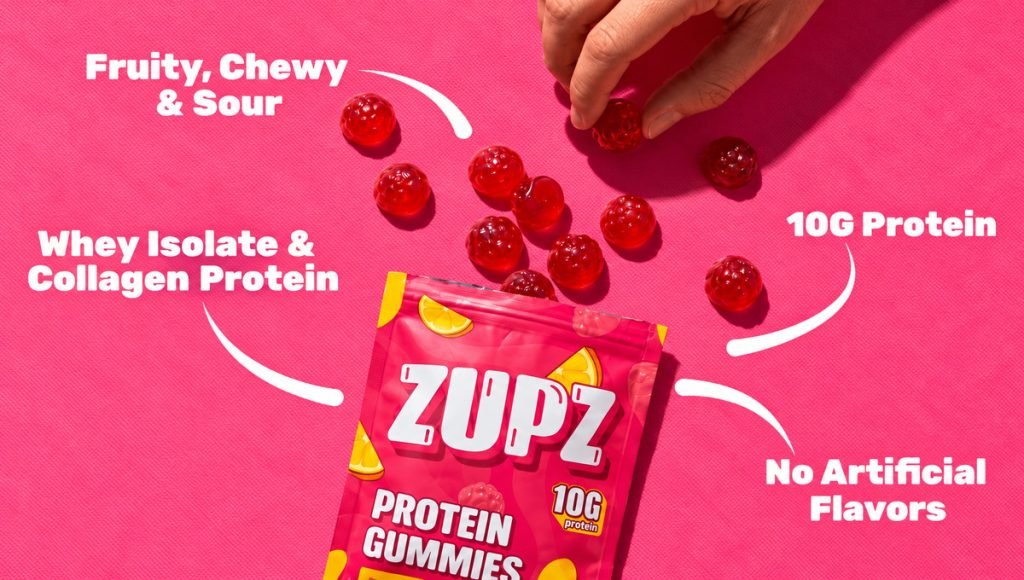
The differences also extend to labeling requirements. In the United States, conventional gummy foods generally use Nutrition Facts labels, while products classified as dietary supplements require Supplement Facts panels. Both types of packaging must communicate accurate product details and follow applicable regulations, with clear typography that makes essential information easy to read.
Protein gummies combine the appeal of traditional candies with nutrition-focused positioning, creating opportunities for more distinctive packaging designs. Effective gummy packaging design should balance an engaging visual identity with clear messaging, helping customers understand the product’s purpose without confusing its benefits or intended use.
From Packaging Concept to Production-Ready Design
Creating effective gummy packaging starts with understanding the product, target audience, and competitive landscape. Research helps identify opportunities for differentiation, while a clear design brief defines the packaging format, brand direction, and key information that needs to appear on the pack.
Once the direction is established, designers develop packaging concepts that combine typography, colors, imagery, and product details into a cohesive visual system. Realistic mockups help evaluate how the designs appear on shelves, in customers’ hands, and across digital platforms. Reviewing these applications early makes it easier to identify areas that need improvement before production.
The final stage involves preparing accurate artwork, dielines, and print-ready files based on the selected packaging specifications. Designers must account for label placement, printing requirements, and the available space for essential information. Careful coordination with packaging suppliers helps ensure the approved design translates effectively from concept to finished product.
Common Gummy Packaging Design Mistakes
One common mistake in gummy packaging design is overcrowding the layout with too many claims, decorative elements, or competing messages. When important product details lack a clear hierarchy, customers may struggle to identify the flavor, benefits, or product type. Strong packaging designs prioritize clarity without sacrificing visual appeal.
Another issue is creating inconsistent designs across different flavors or product variations. Changing typography, layouts, and visual elements too frequently can weaken brand recognition, while using nearly identical colors for every flavor makes products harder to distinguish. A consistent design system should allow each variation to feel unique while remaining part of the same family.
Brands should also avoid prioritizing appearance over functionality. Poorly positioned information, difficult-to-read labels, and packaging that is inconvenient to open or reseal can negatively affect the customer experience. Testing the design through realistic mockups and reviewing production requirements helps identify these problems before the final artwork is approved.
Final Thoughts on Gummy Packaging Design
Successful gummy packaging design combines product protection, clear communication, and a distinctive visual identity. From choosing suitable packaging materials to developing recognizable designs across different flavors, every decision should support functionality, product quality, and brand recognition.
As Thrive and Zupz demonstrate, thoughtful packaging can make protein gummies feel approachable, memorable, and different from conventional nutrition products. Whether launching a new product or refreshing an existing identity, a cohesive packaging system helps brands create a lasting impression across retail and e-commerce.
At BeMain Studio, we help food, wellness, and supplement brands develop distinctive identities and packaging designed for their products and audiences. Whether you’re planning a gummy product launch or refreshing an existing brand, our team can help bring your packaging vision to life.
Frequently Asked Questions About Gummy Packaging Design
What Is the Best Packaging for Gummies?
The best packaging depends on the product type and storage requirements. Resealable pouches are popular for gummy candies and protein snacks, while bottles and jars are common for supplements. Both should provide reliable protection and convenient use.
What Materials Are Used for Gummy Packaging?
Common materials include PET, PE, laminated films, foil, and rigid plastic containers. Each offers different barrier properties that help protect gummies from moisture, oxygen, and environmental conditions.
How Do You Design Packaging for Gummy Supplements?
Start with clear product positioning, recognizable branding, and an appropriate packaging format. Use readable typography to communicate key benefits, serving instructions, and required product information.
What Makes Gummy Packaging Stand Out?
Distinctive colors, clear typography, appealing imagery, and strong product messaging help packaging attract attention. Consistent designs also make the brand easier to recognize across different flavors and products.